Source Polka Dot Paper Dinner Plate for Parties, Cafeterias, and Fast Food
Compare 30 listings for polka dot paper dinner plates featuring eco-friendly designs and customizable options. Buyers can evaluate suppliers in China for multicolor, biodegradable plates suitable for parties, cafeterias, and fast food service.
Key considerations
Products List









Comprehensive Sourcing Guide
Strategic Sourcing Guide for Polka Dot Paper Dinner Plates
Understanding Product Variants and Material Composition
When sourcing polka dot paper dinner plates, buyers must first navigate the significant diversity in material composition and product construction found in the current market. The core keyword often leads to two distinct categories of products: traditional paper-based options and emerging biodegradable alternatives. Based on available product data, the market includes items explicitly identified as "Food Grade Paper" and others constructed from "Wheat Straw." This distinction is critical for procurement strategies, as the material dictates the end-of-life profile and the specific handling requirements during food service.
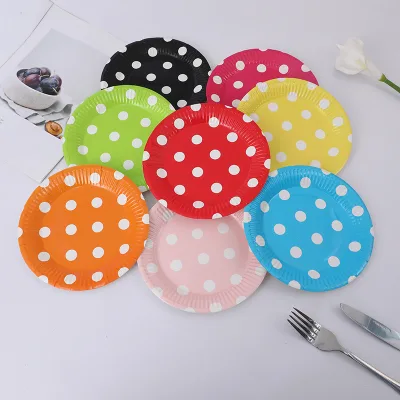
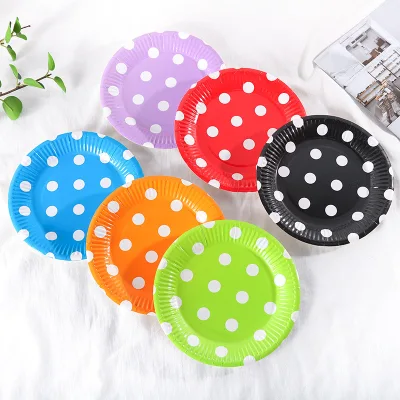
The traditional paper plates often feature a "Disc Type" cup or plate design, available in a wide spectrum of colors including red, orange, green, pink, yellow, black, light blue, purple, rose, and dark blue. These products frequently utilize "UV Coating" for printing handling, which enhances the vibrancy of the polka dot patterns and provides a degree of moisture resistance. In contrast, the wheat straw variants offer a different structural integrity, often marketed under the "Eco-Friendly" attribute. While both categories serve the same functional purpose, the wheat straw option is specifically noted for its biodegradable nature, aligning with sustainability goals that are increasingly important in modern B2B procurement.
Buyers should also note the variation in physical dimensions. The observed product specifications range from 5.5 inches to 11.5 inches, with specific model numbers indicating standard sizes such as 5-inch, 7-inch, 9-inch, and 10-inch options. The "Ab Grade" designation for some ceramic and porcelain listings suggests a high-quality finish, though this grade is typically associated with hard tableware rather than paper products. For paper plates, the focus remains on the "Round" shape and the specific "Colored Polka Dot Paper Plates" description which highlights their suitability for party environments. The ability to customize colors and patterns is a standard feature, with "Customized" and "Custom Order" attributes widely available, allowing buyers to tailor the aesthetic to specific event themes or brand identities.
Technical Specifications and Packaging Standards
Technical specifications for polka dot paper dinner plates extend beyond simple dimensions to include packaging, weight, and structural integrity. The standard packaging methods observed in the market include "Bulk Packing" and "Color Box Packing," with some suppliers offering "Carton" or "Cartoon" (likely a variation of carton) packaging. The single package size for these items is typically recorded around 20x15x10 cm, with a single gross weight of approximately 0.200 kg. These metrics are essential for logistics planning, as they directly influence shipping costs and warehouse storage requirements.
The structural specifications also vary by manufacturer. Some products list their standard as specific dimensions like "25254cm," which likely refers to the dimensions of the outer carton rather than the plate itself. Other listings provide model numbers such as TMC15032801, TMC15032802, T-3197, and CSH-0337, which serve as unique identifiers for inventory management. It is important for buyers to verify that the "Single package size" and "Single gross weight" align with their freight forwarders' requirements to avoid unexpected surcharges.
Furthermore, the "Style" of the product can range from "Modern simplicity" to "Customed Color," influencing the visual appeal of the final presentation. The "Feature" attributes often include "Disposable" and "Stocked," indicating that many suppliers maintain ready inventory for immediate shipment. However, the "Non-Disposable" attribute found in some ceramic listings serves as a reminder that buyers must carefully distinguish between single-use paper products and reusable ceramic alternatives when defining their procurement needs. The "Industry Applications" for these plates are broad, covering "Fast Food," "Cafeterias," and "Parties," suggesting that the product must meet varying standards of durability and aesthetic appeal depending on the end-use environment.
Compliance, Certification, and Regulatory Verification
Navigating the compliance landscape is a critical step in sourcing food-contact paper products. The market data indicates a range of certifications, including "CE/EU," "FDA," "SGS," and "CIQ." These certifications are vital for ensuring that the polka dot paper plates meet safety standards for food contact in various jurisdictions. The presence of "CE/EU" suggests compliance with European safety directives, while "FDA" indicates adherence to United States Food and Drug Administration regulations. "SGS" and "CIQ" represent third-party verification and customs inspection quality, respectively.
Buyers must verify that the specific batch of plates they intend to purchase carries the relevant certifications for their target market. For instance, if the product is destined for the European Union, the "CE/EU" certification is non-negotiable. Similarly, for the US market, "FDA" compliance is essential. The "Standard" field in product listings sometimes references "EN 13432," a European standard for compostability, though this should be treated as a background reference rather than a guaranteed attribute for every listed product. Buyers should explicitly request current test reports or certificates of analysis to confirm that the specific "Food Grade Paper" or "Wheat Straw" material used in the polka dot plates meets these standards.
It is also important to note that while "Eco-Friendly" is a common attribute, the actual biodegradability or compostability of the product should be confirmed through documentation. The "Biodegradable Round Party Plates" description implies a specific environmental benefit, but without a valid certification or test result, this claim cannot be assumed. Procurement teams should prioritize suppliers who can provide up-to-date documentation for "FDA," "CE/EU," and "SGS" to mitigate the risk of regulatory non-compliance.
Cost Drivers and Pricing Dynamics
The pricing of polka dot paper dinner plates is influenced by several key factors, including material type, customization level, and order volume. The observed price range in the market spans from $0.01 to $8.60 USD, a wide disparity that reflects the difference between basic bulk paper plates and premium, customized, or specialized biodegradable options. The "MOQ" (Minimum Order Quantity) also plays a significant role, ranging from 3 units to 100,000 units. Lower MOQs may result in higher per-unit costs due to setup fees for custom printing or smaller production runs, while larger orders typically benefit from economies of scale.
Material costs are a primary driver of price variation. "Wheat Straw" and "Food Grade Paper" with specialized coatings like "UV Coating" generally command higher prices than standard uncoated paper. Additionally, the "Customized" nature of the product, including specific color combinations and polka dot patterns, adds to the production complexity and cost. Suppliers offering "OEM/ODM" services for logo printing or custom designs will likely have different pricing structures compared to those selling "Stocked" items with standard designs.
Buyers should also consider the packaging costs. Options like "Color Box Packing" or "Carton" packaging may incur additional charges compared to "Bulk Packing." The "Single gross weight" of 0.200 kg per unit affects shipping costs, which can be a significant portion of the total landed cost for international buyers. Understanding these cost drivers allows procurement teams to negotiate more effectively and select the right balance between quality, customization, and budget.
Supplier Evaluation and Origin Considerations
Evaluating suppliers requires a focus on their geographic origin and production capabilities. The market data highlights two primary production hubs: "Zibo, Shandong, China" and "Zhejiang, China (Mainland)." These regions are known for their manufacturing expertise in ceramics, paper products, and packaging. Suppliers from Zibo may have a stronger background in ceramic and porcelain production, while those in Zhejiang might specialize in paper and biodegradable materials.
When assessing potential suppliers, buyers should verify the "Brand Name" and "Logo" capabilities. Some suppliers, such as those associated with the brand "EMOER," offer specific branding options. The "Custom Order" and "Logo: OEM/ODM" attributes indicate that suppliers are willing to collaborate on custom designs, which is crucial for businesses looking to create a unique brand identity. However, buyers must ensure that the supplier has the capacity to handle the required "Sample" variability and maintain consistent quality across large production runs.
The "Place of Origin" is also a key factor in supply chain reliability. Suppliers in China (Mainland) are well-established in the global market, but buyers should verify their ability to meet specific lead times and shipping requirements. The "Product Origin" listed as "China" or specific provinces should be cross-referenced with the supplier's actual facility location to ensure transparency. Additionally, the "Feature: Stocked" attribute suggests that some suppliers have ready inventory, which can reduce lead times for urgent orders, while "Customized" items may require longer production cycles.
Quality Control and Long-Term Procurement Strategy
Implementing a robust quality control (QC) strategy is essential for maintaining the integrity of polka dot paper dinner plates. Buyers should establish clear criteria for evaluating the "Printing Handling" and "Color" consistency. The "UV Coating" process must be verified to ensure that the polka dot patterns do not smear or fade during handling and food service. The "Shape: Round" and "Size" specifications must be strictly adhered to, as deviations can affect the stacking and presentation of the plates.
For long-term procurement, buyers should consider the sustainability of the product. The "Eco-Friendly" and "Biodegradable" attributes are increasingly important for businesses aiming to reduce their environmental footprint. However, these claims must be backed by valid certifications and test results. Buyers should also evaluate the "Non-Disposable" vs. "Disposable" nature of the product to ensure it aligns with their operational needs. Reusable options, while potentially more expensive, may offer better long-term value for high-volume users.
Finally, maintaining a relationship with suppliers who offer "Customized" solutions and "OEM/ODM" services can provide a competitive advantage. By working closely with suppliers to refine the "Style" and "Color" of the plates, buyers can create a unique product offering that stands out in the market. Regular quality audits and clear communication regarding specifications, certifications, and packaging requirements will help ensure a successful and sustainable procurement strategy for polka dot paper dinner plates.
Comparison of Product Attributes
| Attribute | Traditional Paper Plates | Wheat Straw/Biodegradable Plates |
|---|---|---|
| Primary Material | Food Grade Paper | Wheat Straw |
| Certifications | CE/EU, FDA, SGS, CIQ | CE/EU, FDA, SGS (Verify) |
| Feature | Disposable, Stocked | Eco-Friendly, Biodegradable |
| Packaging | Bulk, Color Box, Carton | Bulk, Carton |
| Customization | Available (Color, Logo) | Available (Color, Logo) |
| Typical Use | Fast Food, Cafeterias, Parties | Parties, Eco-conscious Events |
| Origin | Zhejiang, China | Zibo, Shandong, China |
This comparison highlights the key differences between traditional and biodegradable options, aiding buyers in making informed decisions based on their specific operational and sustainability requirements.
FAQs
What certifications do polka dot paper dinner plates have?
These plates typically hold CE/EU, FDA, and SGS certifications for food safety. Some listings also include CIQ verification. Buyers should request current test reports to confirm specific batch compliance for their target market before ordering.
Which materials are used for polka dot paper dinner plates?
Products are made from Food Grade Paper or Wheat Straw materials. Wheat straw variants are often marketed as eco-friendly and biodegradable. The material choice impacts the end-of-life profile and handling requirements during food service operations.
Can I customize the color and design of these plates?
Yes, customization is available for colors and patterns including polka dots. Suppliers offer OEM/ODM services for logo printing and custom order acceptance. Buyers can select from various colors like red, orange, green, and pink to match event themes.
What are the standard sizes available for these dinner plates?
Sizes range from 5.5 inches to 11.5 inches with specific models for 5, 7, 9, and 10 inches. The shape is consistently round. Buyers must verify exact dimensions against their logistics requirements to ensure proper stacking and presentation.
Where are these plates manufactured and what is the origin?
Manufacturing origins include Zibo, Shandong, and Zhejiang, China. Some listings simply state China as the place of origin. Buyers should verify the specific facility location to ensure supply chain reliability and transparency regarding production capabilities.
How are these plates packaged for shipping and storage?
Packaging options include Bulk Packing, Color Box Packing, and Carton styles. Single package sizes are typically around 20x15x10 cm with a gross weight of 0.200 kg. These metrics are essential for calculating shipping costs and warehouse storage needs.